Conference of the Parties of the UNFCCC (COP 30)
-
November 10, 2025 - November 21, 2025
- Bélem, Brazil
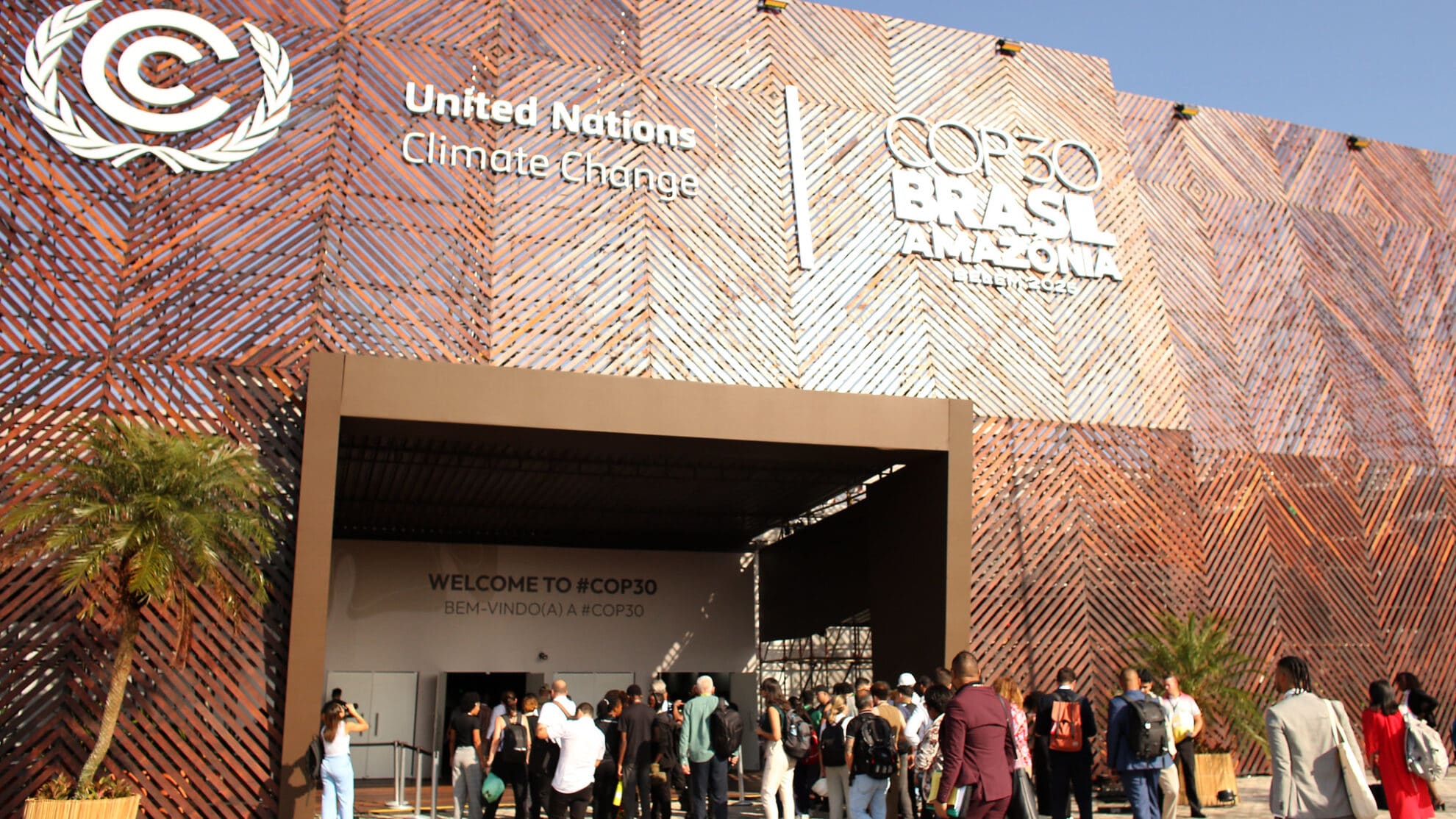
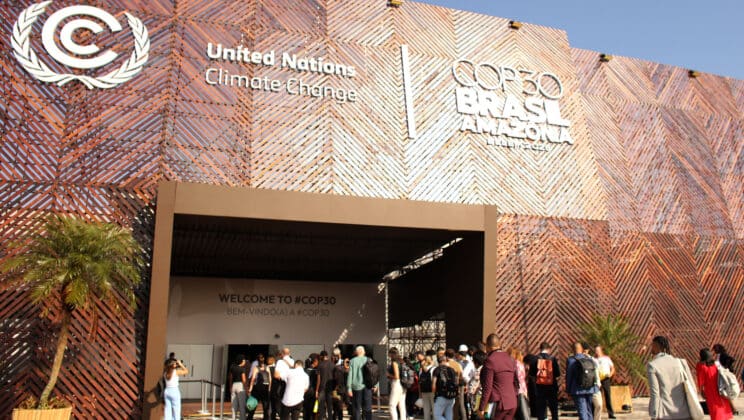
06.11.2025 - Belem - The United Nations Climate Change Conference COP 30. Foto: Raimundo Pacco/COP30
The United Nations Climate Change Conference (or COP) is the world’s only multilateral decision-making space on climate change. Every year, world leaders and negotiators from member states who have signed onto the United Nations Framework Convention on Climate Change (UNFCCC) – as well as climate scientists, worker organizations, civil society, indigenous peoples and the private sector – come together to agree on actions to address the climate crisis. This year marks the 30th meeting of the Conference of the Parties (COP) to UNFCCC.
This COP is being called the conference of adaptation and implementation. As outlined in the Eighth Letter of the Brazilian Presidency of COP30: “… COP30 must be the COP of adaptation. Adaptation ambition and action will be key to advancing in Belém our three priorities: (i) strengthening multilateralism; (ii) connecting the climate regime to people’s daily lives; and (iii) accelerating climate implementation.”
Core to climate action and implementation in the years ahead are countries’ Nationally Determined Contributions (NDCs) – national plans which outline actions from 2025-2035 to reduce greenhouse gas emissions under the Paris Agreement. Heading into the conference, just 72 countries had submitted their plans. UN reports indicate that together, the submitted NDCs cover about 30% of global emissions and fall short of what’s needed to limit global warming to the agreed target of 1.5°C under the Paris Agreement. In Belém, leaders will need to discuss how to address this shortfall and there are high expectations that meaningful agreements on adaptation finance will be one of the COP30 outcomes.
Climate finance will also be high on this year’s agenda, given that during COP29, world leaders agreed to triple climate financing to developing countries, from $100 to $300 billion annually by 2035 with an ambition to further scale up this amount to $1.3 trillion through public and private funds. This year, leaders must show how they will put this commitment – known officially as the New Collective Quantified Goal on Climate Finance (or NCQG) – into action.
And finally, although many other issues will be discussed, the question of how to advance a just transition will be up for discussion once again. Ahead of COP30, governments made progress on outlining the future of the Just Transition Work Programme – an initiative under UNFCCC first established during COP27 which aims to ensure that the move away from fossil fuels is fair, inclusive and leaves no one behind. Though the Programme had experienced challenges in advancing meaningful progress at COP29, this year’s negotiations could see a decision on the proposed Belém Action Mechanism (BAM) for Just Transition. The BAM would provide a coordinating entity and framework for in-country just transition efforts through resources, knowledge sharing, and specific standards, financing rules, and technical guidelines.
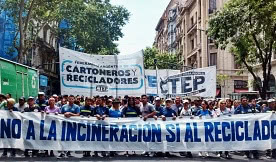
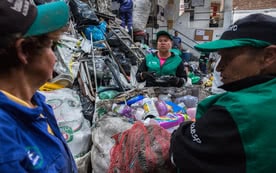
The fact that COP30 is happening in the heart of the Amazon rainforest – in Belém – makes a powerful statement. First, the Amazon region – which encompasses nine countries, with Brazil holding the largest portion of it – is one of the planet’s most important carbon sinks. It is home to extraordinary biodiversity and many indigenous communities who hold knowledge and practices that are crucial to combating climate change. For civil society organizations, the hope is that the knowledge from traditional and indigenous communities, as well as other groups who contribute to climate mitigation (like waste pickers) are better recognized. Second, Belém is representative of the lack of investment in urban sanitation and infrastructure for urban dwellers of the whole Amazon region. Climate action must be connected to lived experiences, and there is an urgent need for climate finance which supports developing cities and communities who are most affected by the impacts of climate change.
The climate crisis is a labour, economic and urban issue. And, the transition to a green economy must be fair and inclusive, leaving no workers behind. This is a just transition.
Cities are both a disproportionate source of CO2 emissions and are particularly impacted by climate shocks – heat waves, flash flooding and drought – that in turn impact water supply, sanitation, transportation, energy provision and other services. WIEGO research shows how these shocks undermine workers’ health, productivity and incomes, exacerbating poverty and inequality. Although they play a crucial role in reducing pollution and carbon emissions, workers in informal employment are frequently excluded from any form of support to cope with climate change and frequently pay out of pocket costs to adapt and cope. At the national level, less than half of climate action plans submitted before COP30 mention poverty and livelihoods among their adaptation priorities while at the global level, research by Cities Alliance shows that just 3.5% of all funding from global climate funds focus on the urban poor. COP30 provides an opportunity to shine a light on the interlinked role of cities, nations and other partners in supporting a just transition, decarbonization and climate adaptation for the world’s workers.
At COP30, WIEGO will share several core messages:
November 11: Advancing community-led approaches and climate justice in the IPCC Climate Change and Cities Report – 11:30—13:00 in Side Event Room 3 in the Blue Zone
This COP30 Official side-event aims to explore the complex impacts of climate change in urban areas, from environmental and spatial challenges to social and economic consequences. Framed around key themes from the upcoming IPCC Special Report on Cities and Climate Change – including adaptation, mitigation, loss and damage, climate justice, intersectionality and climate-induced displacement – the event will underscore concrete examples of climate change mitigation and adaptation, with a particular emphasis on community-led initiatives and data production.
The event is co-organized by the Global Platform for the Right to the City, Habitat International Coalition, Mahila Housing Trust, Misereor, Pólis Institute, WIEGO, Youth for Unity and Voluntary Action (YUVA). WIEGO’s Sonia Dias will share recent research from the Climate Change & the Urban Informal Economy project exploring climate impact and adaptation in the informal economy.
November 11: Catadores pelo Clima: Economia Circular e Mitigação or Waste Pickers for the Climate: Circular Economy and Mitigation – 11:15-13:00 at the Auditório Uruçu in the Green Zone
Adriana Glória Fonseca, a waste picker from the Concaves cooperative in Belém will join the event to speak about WIEGO’s Near-Real Time Monitoring System which follows the impact of climate change in waste picker cooperatives.
November 11: Vozes femininas pela justiça climática, a importância da diversidade e igualdade de gênero or Feminist voices for climate justice: the importance of gender diversity and equality – 17:30-18:45 at the Pavilion for Higher Education for Climate Action in the Blue Zone
At this UNESP-organized event, WIEGO’s input will draw from our gender and waste project and the role of women waste pickers in driving climate action.
November 13: Showcase of Highlighted Results & Solutions, “Circular Economy and Just Transition Panel” a COP30 Presidency Event – 12:30-13:30 at the Axis 4 Thematic Room in the Blue Zone
The panel – co-organized by WIEGO and the Sustainable Business COP – explores how circular economy and materials strategies can reduce emissions and generate green jobs through innovation, strengthening regulation, and inclusive workforce development, highlighting the vital role of workers in informal employment in building resilient, low-carbon systems. Interventions will outline industry priorities and worker perspectives to scale circular economy initiatives.
WIEGO’s Sonia Dias will join the International Alliance of Waste Pickers (Kabir Arora, Eva Molokoena and Severino Lima Junior), Pimp My Carroça and the National Movement of Waste Pickers of Brazil (Suelen Ramos) to speak to climate impacts on waste pickers, the need for evidence-based policies on climate mitigation, as well as the private sector’s responsibility to invest in climate sensitive work infrastructure. Panellists from Ambipar, PwC Brasil, Indorama Ventures, Tetrapak and Saint-Gobain will share industry perspectives.
November 13: Promoting Climate Justice through the Right to Development and Collective Action – 14:30-15:00 , Blue Zone, Room TBD
Drawing on human rights and right to the city frameworks, WIEGO will provide insight on climate change, just transition, and why workers in the informal economy have the right to be acknowledged and included Nationally Determined Contributions (NDCs, or national level plans which aim to reduce country emissions and adapt to the impacts of climate change) and Least Developed Countries (LDCs). The event is being organized by the UN Human Rights Secretariat of Expert Mechanism on the Right to Development.
November 14: Solutions and Collective Action from People Living and Working in Informality to Build Resilience – 17:00-18:00, Room (TBD)
A fifth of the world’s population live in informality with many more working in informality. This event will showcase solutions that are locally available and have proven to be effective in building the resilience of people, especially women, living in informality. The event will focus on the intersections of informal settlements, informal work, affordable housing, poverty eradication, building resilience in communities and delivering real solutions and jobs for real people. WIEGO will join the Roof Over Our Head Campaign, members of the Marrakech Partnership Nexus Area Working Group on Empowering People, Slum Dwellers International, ICLEI, TECHO, Habitat for Humanity International and Build Change to highlight how climate finance and improved work infrastructure can improve the climate resilience of waste pickers and other workers in the informal economy.
November 16: Mulheres da Amazônia: Moda, Design Circular e Audiovisual para a Agenda Climática Global e o Comércio Internacional or Women of the Amazon: Fashion, Circular and Audiovisual Design for the Global Climate Agenda and International Business – 14:00- 16:00 at Parque da Residência
At this event, WIEGO will discuss the scale of fashion waste and how reuse and repair strategies can contribute to circularity. Waste picker leader Aline Souza will share initiatives taken by workers towards greater circularity in textile waste. The event will include participation from UN Women, ITC, Rede Katahirine, and Brasil Eco Fashion.