CSW70: Justice for All Women and Girls
-
March 9, 2026 - March 19, 2026
- UN Headquarters, New York
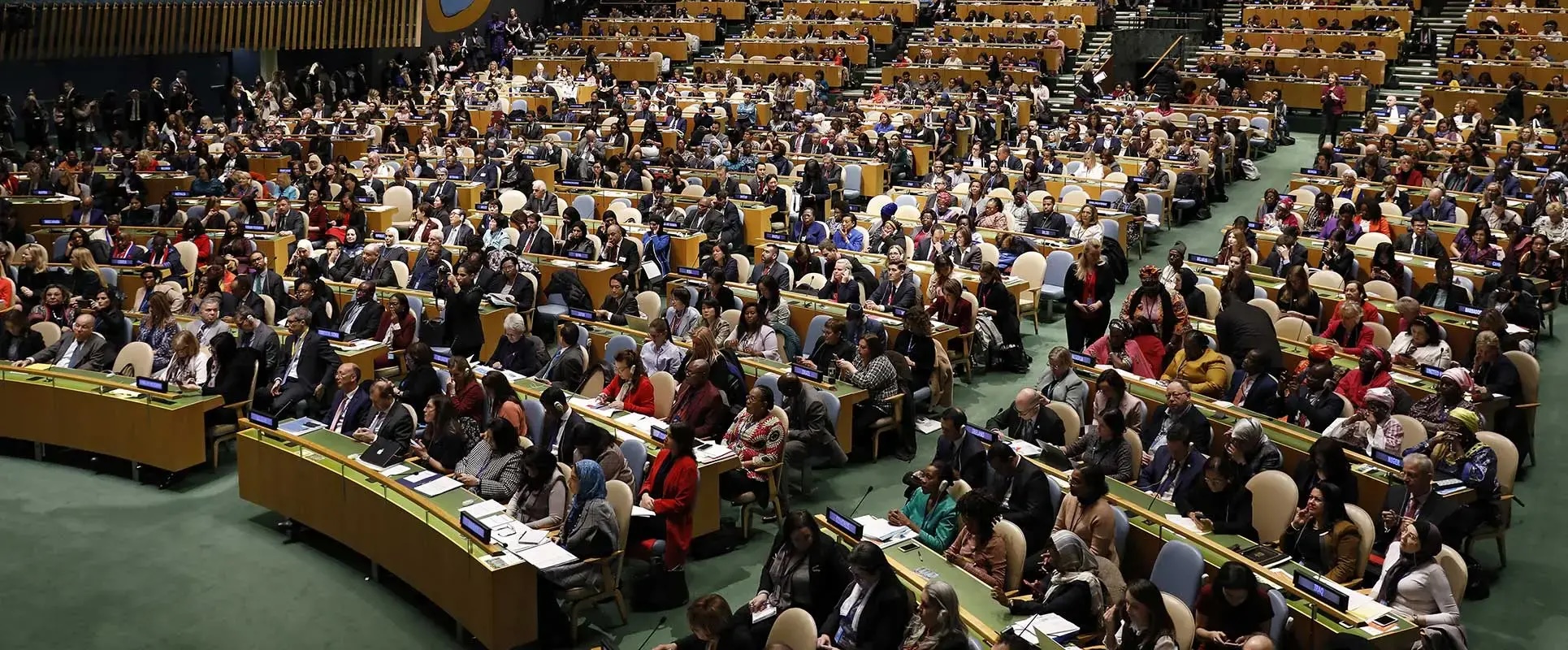
CSW63 - Opening of the 63rd session of the Commission on the Status of Women. Credit: UN Women/Ryan Brown
The 70th annual Commission on the Status of Women (CSW70), the UN’s largest annual gathering on gender equality and women’s rights, gathered at the UN Headquarters in New York to advance justice in the lives of women and girls around the world.
CSW70’s priority was ‘ensuring and strengthening access to justice for all women and girls’. Participants discussed what legal insecurity means in life, and recommended actions to close the gap.
WIEGO experts, alongside partners from the International Domestic Workers Federation (IDWF), StreetNet International, Global Labor Justice and Working Horizons Initiative/Horizontes do Trabalho, took part in CSW side events, exploring how a feminist labour framework can underpin a resilient labour movement, and ways of organizing for justice for women care workers.
As workers face unprecedented threats, with rising corporate power and the shrinking of democratic space, access to justice has never been more critical. Action to guarantee this access is particularly urgent for women and girls – and for working-class women and those living in poverty, true justice requires collective power and robust mechanisms to ensure economic accountability and equitable social outcomes.
This side event, held on March 16th, brought together representatives from trade unions, organizations that support workers in informal employment, feminist advocates, philanthropy, and public sector champions to deliberate on a path forward for women workers around the world. Several members of the WIEGO network participated, including:
The event included a series of roundtables which explored how a labour feminist framework can counter corporate dominance and democratic decline, identify the capacities needed to defend economic justice, and examine how collective action can drive the implementation of more inclusive policies and practices. The discussion focused on the investments needed to enable migrant, informal and precarious workers and their organizations to engage on more equal terms with the labour movement – including ways to build a more representative and resilient movement, and strengthen alliances across sectors, and between formal and informal labour.
WIEGO’s Teresa Marchiori participated in a roundtable discussion about how women care workers are leading their unions and associations in securing access to justice, through both legal channels and workplace mechanisms negotiated by workers and unions with employers.
Care work across the world is primarily performed by women, including women of colour and migrant women, and much care work is also performed under informal conditions. As a result, this work is often undervalued, leaving care workers without access to social protections and coverage under labour laws and vulnerable to abuse including violence and harassment by employers and those they care for.
This side event was organized by UNI Global and WIEGO.
CSW70 is taking place at a critical turning point – the rule of law is under attack, democratic space is shrinking, and the rights of women and girls are being rolled back. Justice systems are failing to protect them.
The majority of the world’s women and girls have just 64 percent of the legal rights of men, keeping legal equity out of reach. The ramifications of this span lifetimes, generations, and impact whole societies.
The priority theme of CSW70, “Ensuring and strengthening access to justice for all women and girls”, discusses what legal inequality means in life, and recommends actions to close the gap.
The United Nations Commission on the Status of Women (CSW) was established in 1946 to promote gender equality and women’s rights globally.