Skip To Content
Research Reports

Employment, The Informal Sector, and Poverty: Data and Analytical Challenges

By , on April 01, 2007

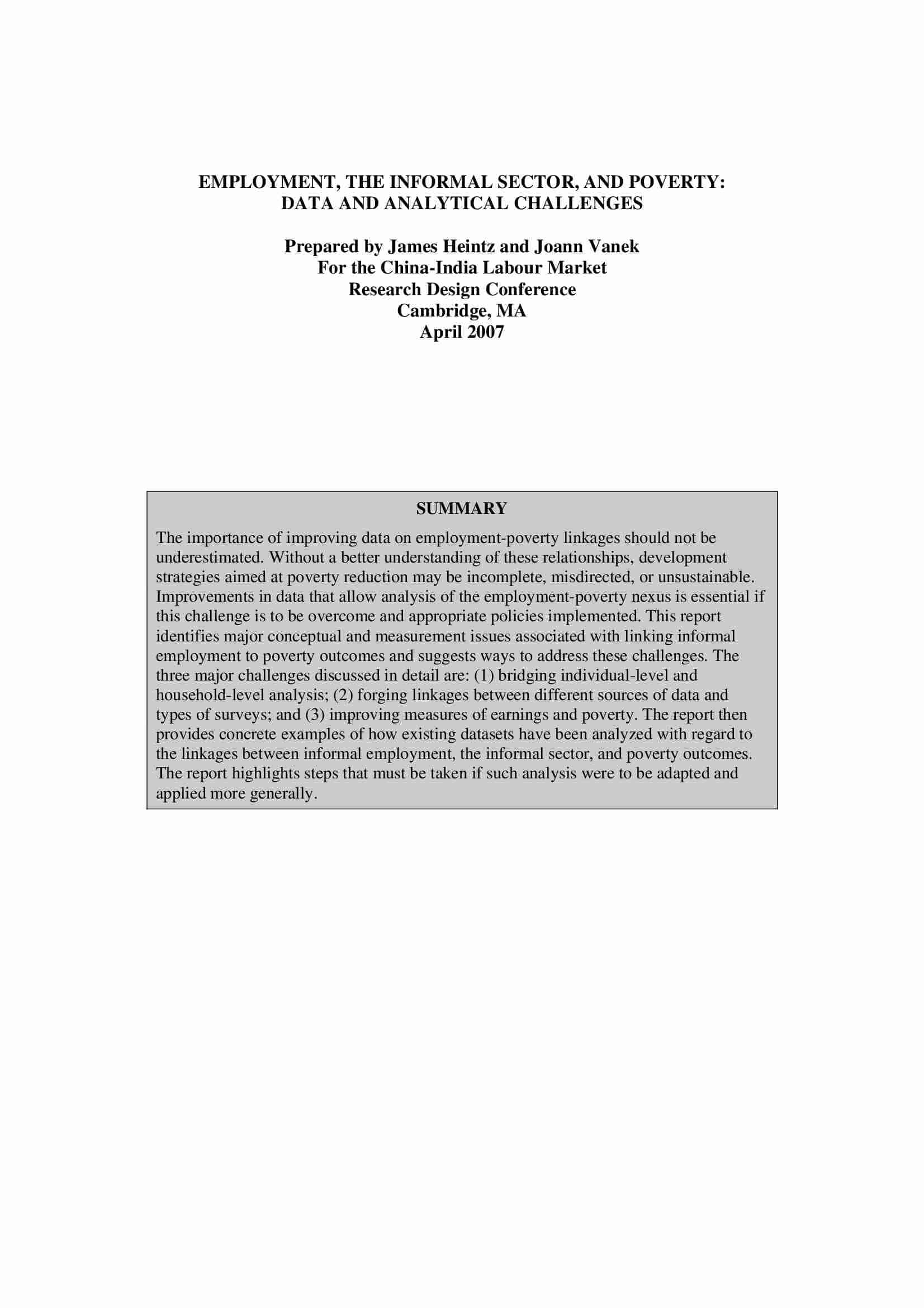
The importance of improving data on employment-poverty linkages should not be underestimated. Without a better understanding of these relationships, development strategies aimed at poverty reduction may be incomplete, misdirected, or unsustainable. Improvements in data that allow analysis of the employment-poverty nexus is essential if this challenge is to be overcome and appropriate policies implemented. This report identifies major conceptual and measurement issues associated with linking informal employment to poverty outcomes and suggests ways to address these challenges. The three major challenges discussed in detail are: (1) bridging individual-level and household-level analysis; (2) forging linkages between different sources of data and types of surveys; and (3) improving measures of earnings and poverty. The report then provides concrete examples of how existing datasets have been analyzed with  regard to the linkages between informal employment, the informal sector, and poverty outcomes. The report highlights steps that must be taken if such analysis were to be adapted and applied more generally.

It was prepared for the China-India Labour Market Research Design Conference.

View list of all: Research Reports
Download the PDF(this link opens in new window)

Citation Information

Heintz, James, and Vanek, Joann. Employment, The Informal Sector, and Poverty: Data and Analytical Challenges. , , . , 2007. https://www.wiego.org/wp-content/uploads/2019/09/Heintz_Vanek_China-IndiaPovertyandEmployment.pdfHeintz, J., and Vanek, J. (2007). Employment, The Informal Sector, and Poverty: Data and Analytical Challenges. , , . https://www.wiego.org/wp-content/uploads/2019/09/Heintz_Vanek_China-IndiaPovertyandEmployment.pdfHeintz, James, and Vanek, Joann. "Employment, The Informal Sector, and Poverty: Data and Analytical Challenges." 2007, .Heintz James, and Vanek Joann. "Employment, The Informal Sector, and Poverty: Data and Analytical Challenges." (2007). https://www.wiego.org/wp-content/uploads/2019/09/Heintz_Vanek_China-IndiaPovertyandEmployment.pdfHeintz, J, and Vanek, J 2007, 'Employment, The Informal Sector, and Poverty: Data and Analytical Challenges', , , . https://www.wiego.org/wp-content/uploads/2019/09/Heintz_Vanek_China-IndiaPovertyandEmployment.pdfJames Heintz, and Joann Vanek, 'Employment, The Informal Sector, and Poverty: Data and Analytical Challenges' (2007). Heintz J., and Vanek J. Employment, The Informal Sector, and Poverty: Data and Analytical Challenges. . 2007. https://www.wiego.org/wp-content/uploads/2019/09/Heintz_Vanek_China-IndiaPovertyandEmployment.pdfHeintz, James, and Vanek, Joann. Employment, The Informal Sector, and Poverty: Data and Analytical Challenges. . 2007. , . https://www.wiego.org/wp-content/uploads/2019/09/Heintz_Vanek_China-IndiaPovertyandEmployment.pdf

The WIEGO Research Library

WIEGO is at the forefront of developing statistics and research to help audiences understand the informal economy. Our library includes over two decades-worth of informal economy research, policy analysis, statistics and documentation of organizing efforts.