Statistical Briefs 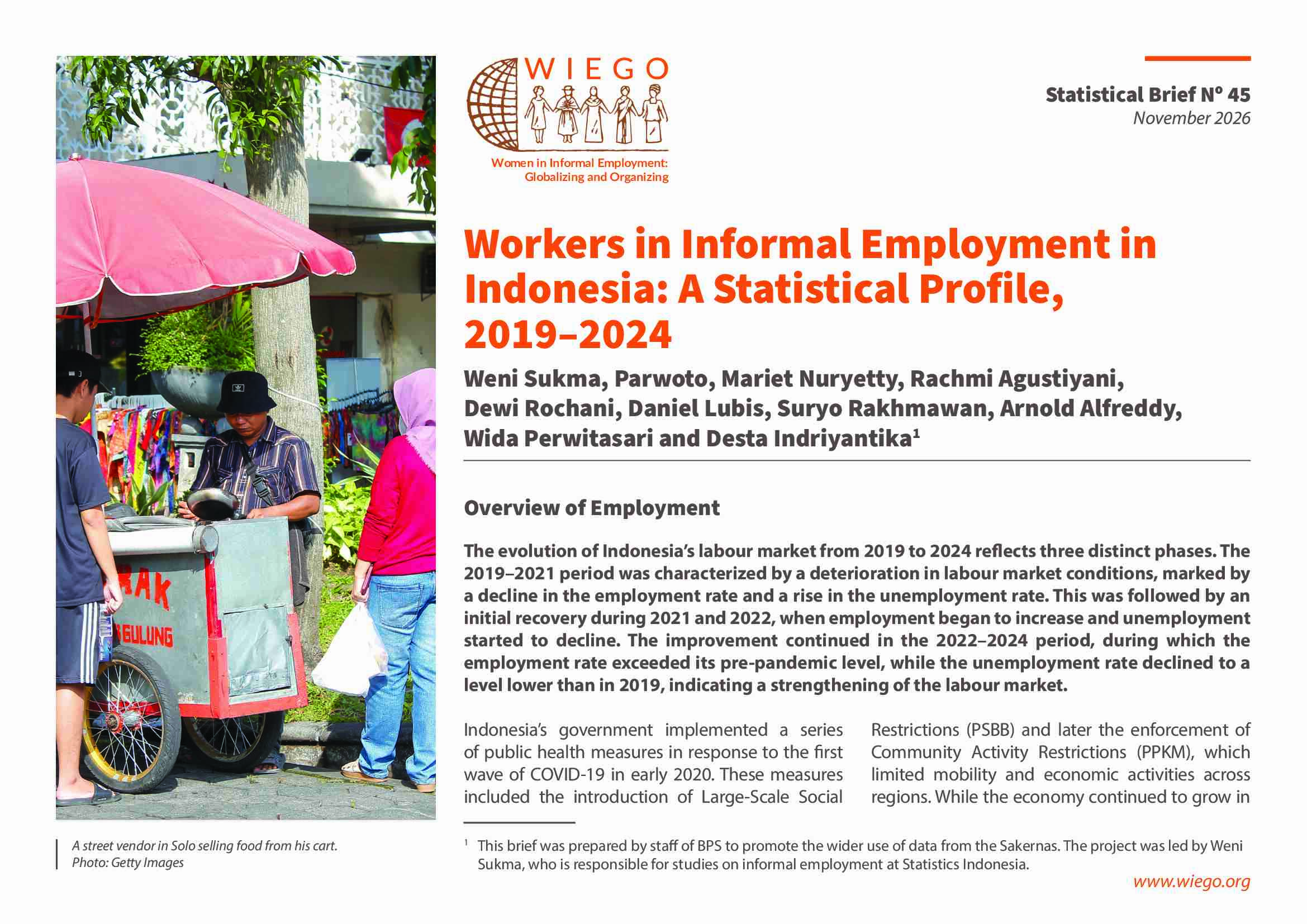 Download the PDF(this link opens in new window)
Workers in Informal Employment in Indonesia: A Statistical Profile, 2019–2024
- The evolution of Indonesia’s labour market from 2019 to 2024 reflects three distinct phases. The 2019–2021 period was characterized by a deterioration in labour market conditions, marked by a decline in the employment rate and a rise in the unemployment rate. This was followed by an initial recovery during 2021 and 2022, when employment began to increase and unemployment started to decline. The improvement continued in the 2022–2024 period, during which the employment rate exceeded its pre‐pandemic level, while the unemployment rate declined to a level lower than in 2019, indicating a strengthening of the labour market.
- Workers in informal employment were more likely than those in formal employment to experience reduced income and reduced hours of work during the pandemic. Although there were improvements in both indicators by 2022, reductions in income continued to be reported by a substantial number of workers, especially those in informal employment.
- The data presented in this brief are based on estimates of informal employment derived from the August rounds of the semi‐annual National Labour Force Survey (Sakernas), conducted by Statistics Indonesia (BPS) in 2019, 2021, 2022 and 2024. This brief presents selected indicators at the national, urban and Jakarta Metropolitan levels.
View list of all: Statistical Briefs
Citation Information
. Workers in Informal Employment in Indonesia: A Statistical Profile, 2019–2024. WIEGO Statistical Brief No. 45, , . WIEGO, 2026. https://www.wiego.org/wp-content/uploads/2026/11/Workers-in-Informal-Employment-in-Indonesia-A-Statistical-Profile-2019–2024_Statistical-Brief-45.pdf. (2026). Workers in Informal Employment in Indonesia: A Statistical Profile, 2019–2024. WIEGO Statistical Brief No. 45, , . https://www.wiego.org/wp-content/uploads/2026/11/Workers-in-Informal-Employment-in-Indonesia-A-Statistical-Profile-2019–2024_Statistical-Brief-45.pdf. "Workers in Informal Employment in Indonesia: A Statistical Profile, 2019–2024." WIEGO Statistical Brief No. 45, WIEGO, 2026, .. "Workers in Informal Employment in Indonesia: A Statistical Profile, 2019–2024." WIEGO Statistical Brief No. 45 (2026). https://www.wiego.org/wp-content/uploads/2026/11/Workers-in-Informal-Employment-in-Indonesia-A-Statistical-Profile-2019–2024_Statistical-Brief-45.pdf 2026, 'Workers in Informal Employment in Indonesia: A Statistical Profile, 2019–2024', WIEGO Statistical Brief No. 45, , . https://www.wiego.org/wp-content/uploads/2026/11/Workers-in-Informal-Employment-in-Indonesia-A-Statistical-Profile-2019–2024_Statistical-Brief-45.pdf, 'Workers in Informal Employment in Indonesia: A Statistical Profile, 2019–2024' (2026) WIEGO Statistical Brief No. 45 . Workers in Informal Employment in Indonesia: A Statistical Profile, 2019–2024. WIEGO Statistical Brief No. 45. 2026. https://www.wiego.org/wp-content/uploads/2026/11/Workers-in-Informal-Employment-in-Indonesia-A-Statistical-Profile-2019–2024_Statistical-Brief-45.pdf. Workers in Informal Employment in Indonesia: A Statistical Profile, 2019–2024. WIEGO Statistical Brief No. 45. 2026. , . https://www.wiego.org/wp-content/uploads/2026/11/Workers-in-Informal-Employment-in-Indonesia-A-Statistical-Profile-2019–2024_Statistical-Brief-45.pdf