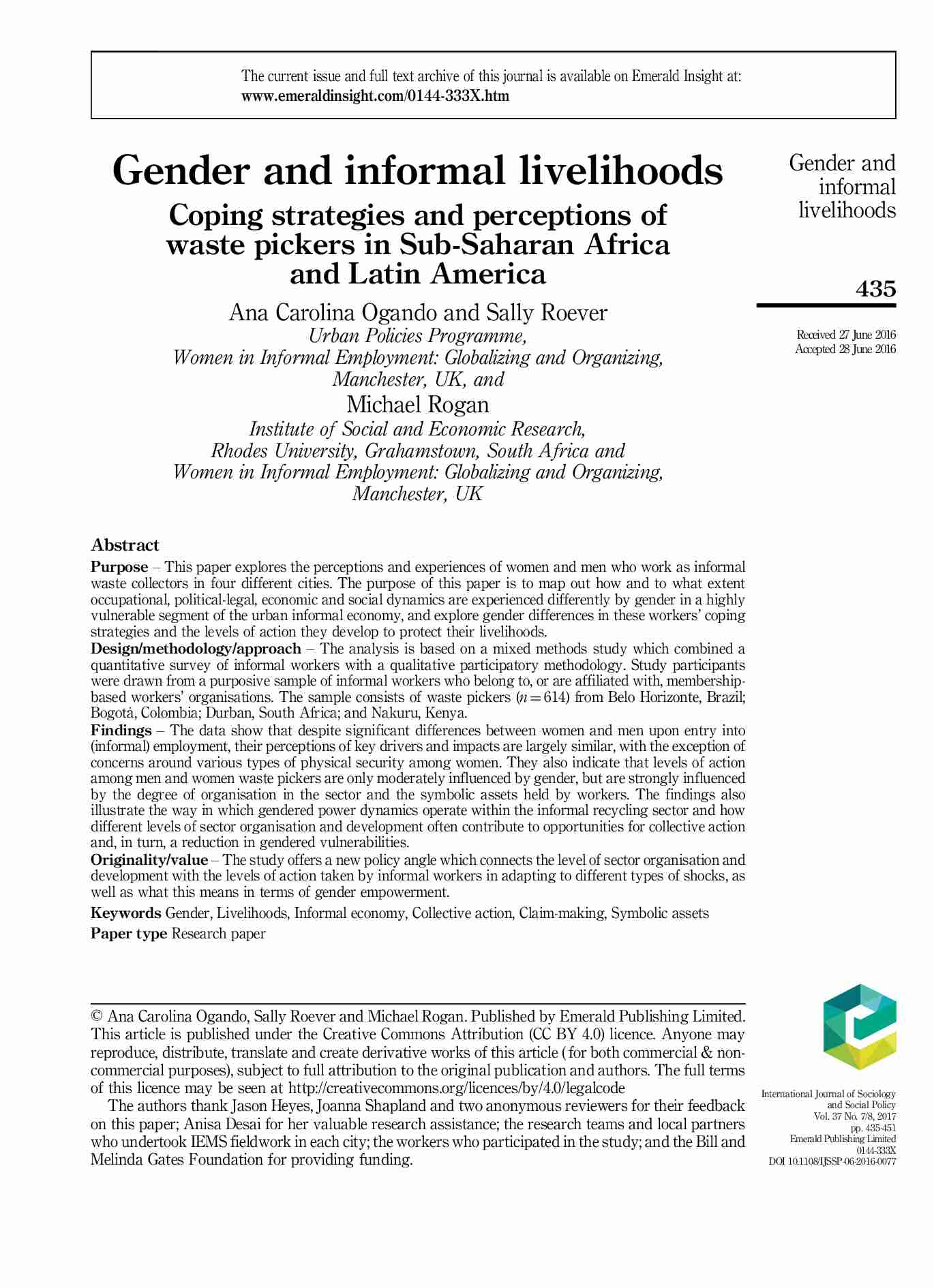
Gender and Informal Livelihoods: Coping Strategies and Perceptions of Waste Pickers in Sub-Saharan Africa and Latin America
This paper explores the perceptions and experiences of women and men who work as informal waste collectors in four different cities. The purpose of this paper is to map out how and to what extent occupational, political-legal, economic and social dynamics are experienced differently by gender in a highly vulnerable segment of the urban informal economy, and explore gender differences in these workers’ coping strategies and the levels of action they develop to protect their livelihoods.
View list of all: Journal Articles
Citation Information
. Gender and Informal Livelihoods: Coping Strategies and Perceptions of Waste Pickers in Sub-Saharan Africa and Latin America. International Journal of Sociology and Social Policy, 37(7/8), 435-451. Emerald Publishing Limited, 2017. https://www.wiego.org/wp-content/uploads/2025/04/Gender-and-informal-livelihoods-Coping-strategies-and-perceptions-of-waste-pickers-in-Sub-Saharan-Africa-and-Latin-America.pdf. (2017). Gender and Informal Livelihoods: Coping Strategies and Perceptions of Waste Pickers in Sub-Saharan Africa and Latin America. International Journal of Sociology and Social Policy, 37(7/8), 435-451. https://www.wiego.org/wp-content/uploads/2025/04/Gender-and-informal-livelihoods-Coping-strategies-and-perceptions-of-waste-pickers-in-Sub-Saharan-Africa-and-Latin-America.pdf. "Gender and Informal Livelihoods: Coping Strategies and Perceptions of Waste Pickers in Sub-Saharan Africa and Latin America." International Journal of Sociology and Social Policy, Emerald Publishing Limited, 2017, pp. 435-451.. "Gender and Informal Livelihoods: Coping Strategies and Perceptions of Waste Pickers in Sub-Saharan Africa and Latin America." International Journal of Sociology and Social Policy 37, no. 7/8 (2017): 435-451. https://www.wiego.org/wp-content/uploads/2025/04/Gender-and-informal-livelihoods-Coping-strategies-and-perceptions-of-waste-pickers-in-Sub-Saharan-Africa-and-Latin-America.pdf 2017, 'Gender and Informal Livelihoods: Coping Strategies and Perceptions of Waste Pickers in Sub-Saharan Africa and Latin America', International Journal of Sociology and Social Policy, 37(7/8), pp. 435-451. https://www.wiego.org/wp-content/uploads/2025/04/Gender-and-informal-livelihoods-Coping-strategies-and-perceptions-of-waste-pickers-in-Sub-Saharan-Africa-and-Latin-America.pdf, 'Gender and Informal Livelihoods: Coping Strategies and Perceptions of Waste Pickers in Sub-Saharan Africa and Latin America' (2017) 37 International Journal of Sociology and Social Policy 435-451. Gender and Informal Livelihoods: Coping Strategies and Perceptions of Waste Pickers in Sub-Saharan Africa and Latin America. International Journal of Sociology and Social Policy. 2017;37(7/8):435-451. https://www.wiego.org/wp-content/uploads/2025/04/Gender-and-informal-livelihoods-Coping-strategies-and-perceptions-of-waste-pickers-in-Sub-Saharan-Africa-and-Latin-America.pdf. Gender and Informal Livelihoods: Coping Strategies and Perceptions of Waste Pickers in Sub-Saharan Africa and Latin America. International Journal of Sociology and Social Policy. 2017, 37(7/8), 435-451. https://www.wiego.org/wp-content/uploads/2025/04/Gender-and-informal-livelihoods-Coping-strategies-and-perceptions-of-waste-pickers-in-Sub-Saharan-Africa-and-Latin-America.pdf