Skip To Content

Homeworkers - workers who are sub-contracted by individual entrepreneurs, factories or firms and produce goods from their homes - are integral to garment supply chains and international brands. But they are often excluded from labour protections, earn below the minimum wage and have to cover the costs of their own tools, machinery and electricity.

Factories often subcontract work to homeworkers through intermediaries. This can make it difficult for homeworkers to identify which factories and brands they are working for, and to hold them accountable for their working conditions.  This sub-contracting model for homeworkers is particularly prominent in Asia.

Janhavi Dave, the former International Coordinator of HomeNet International was serving as the coordinator HomeNet South Asia at the time, and said homeworkers being in a position to shape European supply chain law in 2020 was a major opportunity.

“It’s very big [and] significant for homeworkers. It’s very difficult to catch hold of the primary employers, which are the brands, the big companies based out of Europe. So it’s not one country, it’s all the EU countries, and it is for all the labour within the supply chain that we are talking about. So it’s big for workers.”

Up to 14 homeworker organizations across eight countries from South and South East Asia then came together around an advocacy strategy that culminated in a significant win for homeworkers around the world.

Years of organizing prepared homeworkers to act

Homeworker organizations in Asia were already well-positioned to make their voices heard on this issue, as they had been working for years with WIEGO on building platforms of demands about the conditions of work in the supply chain.

HomeNet South Asia, HomeNet South East Asia and WIEGO’s work in 2015 organizing home-based workers across Asia helped form a platform of homeworker demands and prepare for the International Labour Conference (ILC).

In 2016, HomeNet South East Asia and WIEGO worked on a regional strategy together, building the capacity of homeworker leaders to understand their working conditions from a supply chain perspective, and meeting up with allies that had experience and expertise in going head-to-head with brands.

This sustained organizing meant homeworker organizations in Asia were ready to act when the European legislative process opened in April 2020.
Homeworkers decide on tactics and enter the debate

Homeworker organizations decided to advocate for the proposed directive to include homeworkers, taking into account the risks that come with added visibility: that brands may respond by reducing or eliminating the practice of subcontracting workers.

WIEGO was then able to provide technical expertise and assistance, identify potential partnerships and support homeworkers to develop messages and make strategic decisions about what to emphasize, how and to whom.

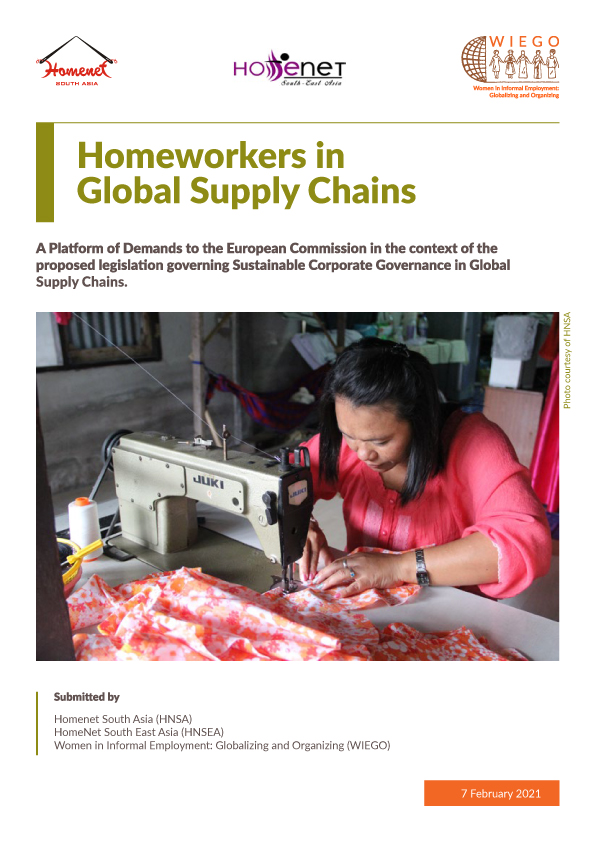
The homeworker organizations decided they would submit a platform of demands to the European Union Commission. Representatives from organizations in eight South and Southeast Asian countries contributed to the platform and workshopped it with WIEGO. Their involvement was important, as subcontracting is prevalent in the regions, and HomeNet International had established worker organizations.

On 6 February 2021, organizations and networks from Bangladesh, Cambodia, India, Indonesia, Nepal, Pakistan, the Philippines and Thailand submitted the platform and a completed questionnaire to the European Commission.

Marlese von Broembsen, WIEGO’s Law Programme Director at the time, said: “We all went online at the same time to do our submissions. And then to attach to the submission, the platform of demands. So that was quite a really amazing key moment.”

Focusing on whole-chain coverage and enforcement

The advocacy focused on two key issues where homeworkers could contribute essential experience.

The first was that the legislation should apply to all workers, in all tiers of the chain, including homeworkers. The second was about enforcement — that it should include worker-driven access to “justice from below.”

“Justice from below” means workers and their organizations help shape, monitor and enforce the protections intended for them, rather than relying on systems designed from the top down.

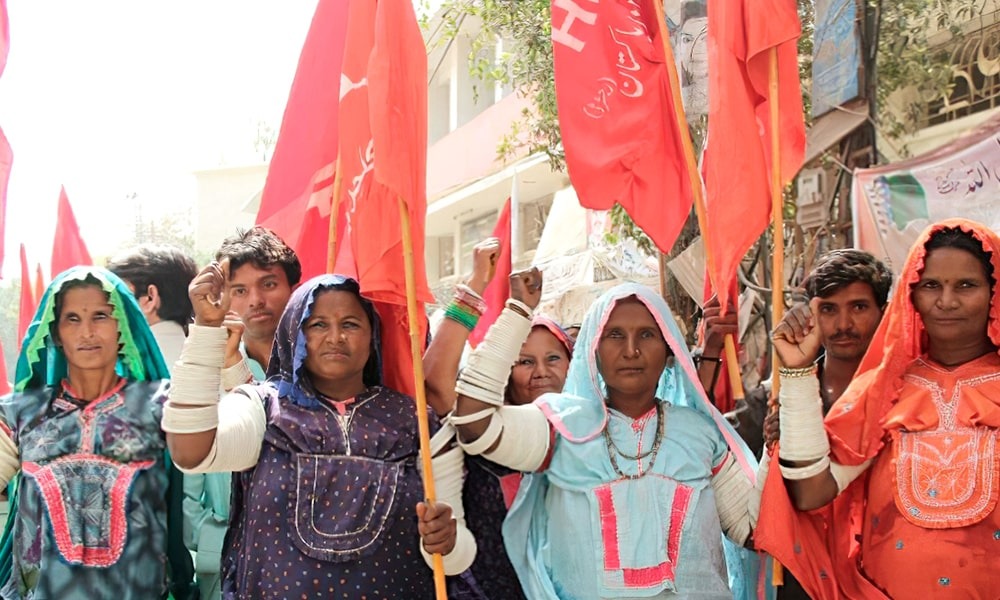
“Homeworkers are not heard, do not have any platform, if a dispute arises with their employer or any problem arises during the work, they don’t have any place to fix the issue, because of their invisibility in the supply chain,” Zehra Khan, general secretary of the Home-Based Women Workers Federation of Pakistan, said in a WIEGO/HNI panel at the OECD Forum on Business and Human Rights in February 2022.

WIEGO and homeworker organizations advocated for worker-driven enforcement, and ensured workers were at the forefront of discussions articulating their realities and demands.

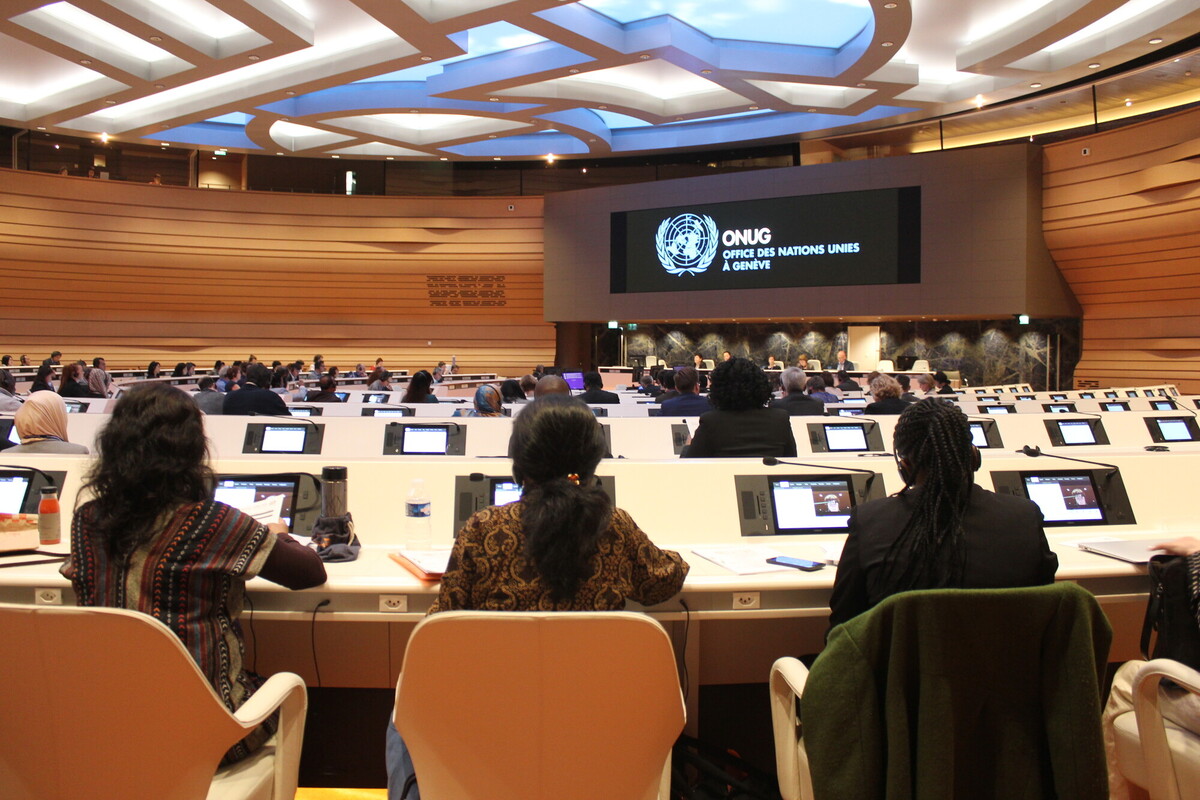
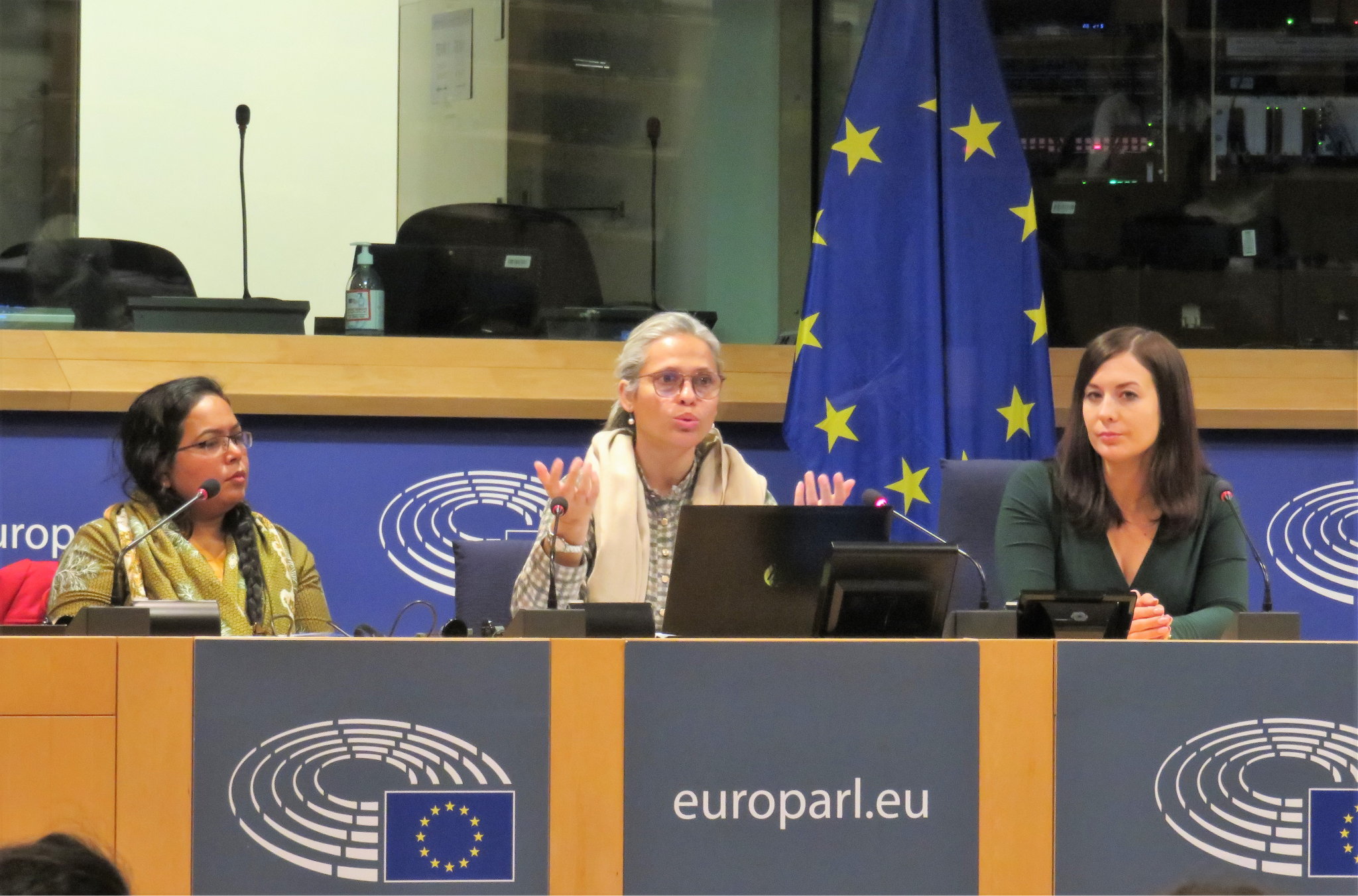
Caption: Zehra Khan of the Home-Based Women Workers Federation speak at the European Parliament in 2022. Photo credit: Clean Clothes Campaign

Strategic alliances carry homeworkers’ demands further

Homeworker organizations built alliances with advocacy networks, trade unions, media and politicians who could help carry their  demands into European policy debates.

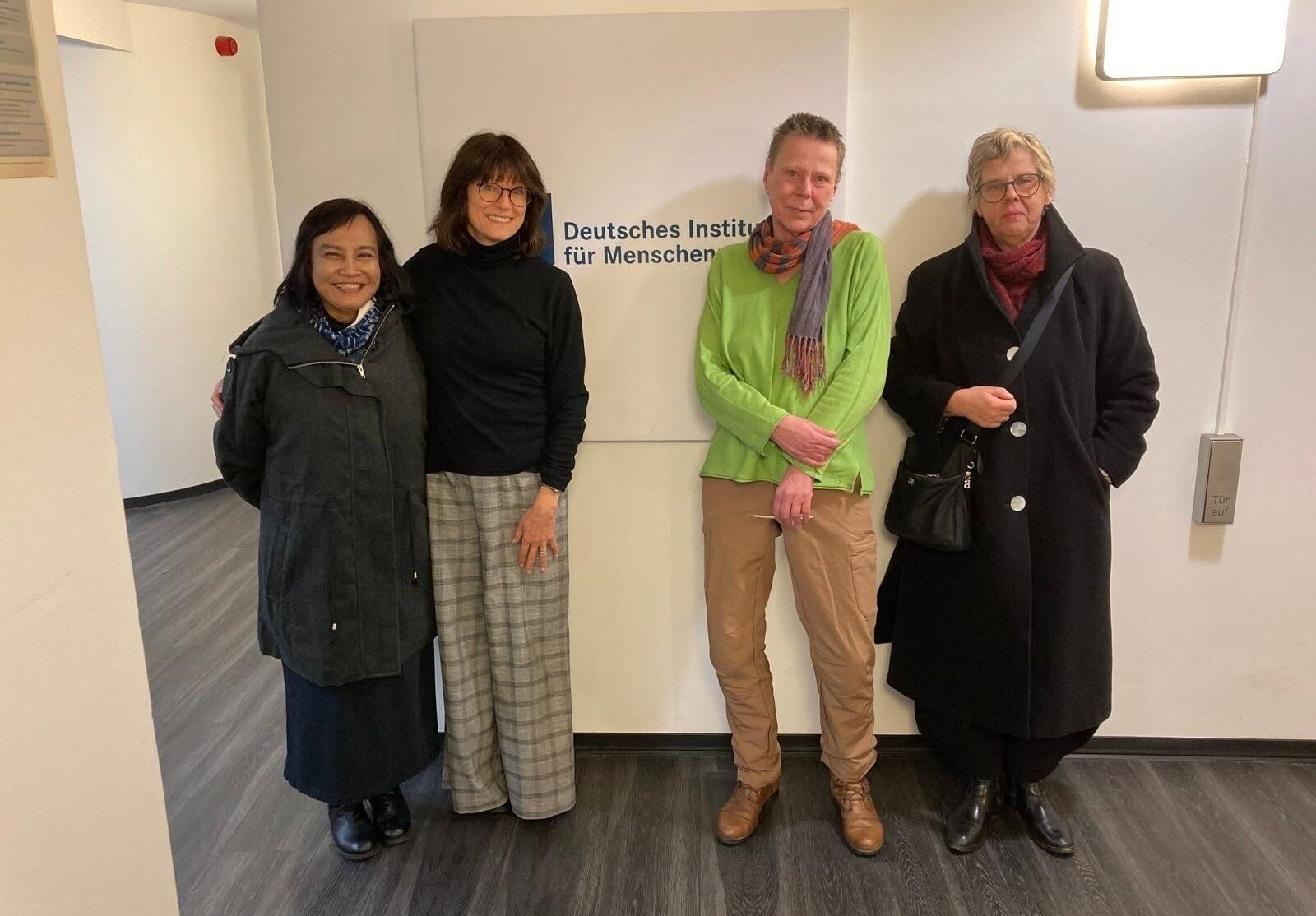
During a HNI and WIEGO delegation trip to Brussels, Zehra Khan met European journalists, politicians, trade unionists and members of the Clean Clothes Campaign. She also spoke at a European Parliament panel about women’s experiences in Pakistan’s garment sector.

“It was a great experience,” she said.

“The politicians we met, from the leftist party to the conservative party, were very much concerned about the situation we have in Pakistan and what the employers, especially the brands, are doing in our country, so they’re very keen to listen to our stories… And they gave a very positive response on all these things, especially regarding… that they have to be transparent with the list of workers: who the brands are giving the work, how many contractors are there. So that was a very amazing thing.”

Making connections with European trade unions was also critical — WIEGO facilitated an online dialogue in which Khan spoke to trade union representatives about the ways homeworkers could use the complaints and grievance mechanisms in the EU directive, and how trade unions could help.

The online dialogue resulted in a representative from the European Trade Union Confederation proposing that unions push for a reference to C177 in the directive, and inviting Khan to join a panel discussion with EU policymakers.

Whole-chain coverage, and a foundation for future advocacy

On 23 February 2022, the European Commission published a draft directive establishing corporate responsibilities for human rights throughout the supply chain.

HomeNet International has since made supply chains a key issue, while HomeNet South Asia and HomeNet South-East Asia have joined the Clean Clothes Campaign. Discussions about homeworkers and living wages are now embedded in the campaign’s work following joint advocacy efforts for the EU Directive.

“One key issue in the next phase will be enforcement”, says Janhavi Dave.

“A worker-driven supply chain governance and enforcement is important, especially in global supply chains, because the primary employer is not based where the workers are working. So the geographical context is very different… so you need to bridge that gap. And that can only happen if worker voices are heard in the process.”

By coming together around shared demands, homeworker organizations turned their often-unrecognized place in garment supply chains into a collective voice in European policy debates—contributing to whole-chain coverage in the draft directive and creating a stronger foundation for the continuing push for worker-driven policies.

Update: The EU legislation was subsequently diluted: amendments approved in 2026 as part of an omnibus ‘simplification’ package raised the thresholds for companies covered from more than 500 employees and €150 million in global turnover in the original proposal to more than 5,000 employees and €1.5 billion—limiting its application to only the largest corporations. 

Its core requirement remains the same: the Directive retains a risk-based, rather than tier-based, approach, meaning homeworkers remain within its coverage. Companies must identify and address the most severe and likely risks to human rights and the environment across their value chains. 

EU member states have until July 2028 to update their laws and regulations to meet the Directive’s requirements. However, it seems much less likely that the Directive will spark a wave of strong due diligence laws across Europe, as originally anticipated. 

In response to this change in the regulatory landscape, WIEGO and HNI  have shifted their strategy. The new strategy focuses on making the case that extending due diligence to sub-contracted homeworkers is necessary, feasible and beneficial. 

While the number, complexity, and diversity of due diligence initiatives make them difficult to influence, a common challenge is the lack of practical, worker-centered guidance on adapting due diligence to the realities of home-based work. 

In 2026, HNI and WIEGO began a three-year collaboration to test approaches locally in Bangladesh and Pakistan, facilitate learning among HNI affiliates across South Asia and South East Asia, and bring lessons into global advocacy.