Skip To Content
Mexico City waste pickers

How Mexico City waste pickers fought for – and won – their labour rights

The city’s ‘superheroes of waste’, Lxs Rifadxs de la Basura, combined a strategic communications campaign, organizing and alliance building with local and regional human rights bodies to secure a wage rise for waste workers.

Share

In Mexico City, thousands of people work daily keeping the city clean, collecting waste and recycling reusable materials. 

The city is estimated to be the second largest urban waste producer in the world, generating 13,000 metric tons of waste every day. While there are more than 14,000 unionized workers employed by Mexico City’s solid waste management system, at least 10,000 waste pickers are “volunteer” workers, or “voluntarixs”.

A "volunteer" waste picker in Mexico City shows the tips they receive from residents. This is the only income they receive for their essential role in the city's waste management system. Photo credit: Angie Queupumil

An essential yet unpaid labour force

Voluntarixs do not have a salary, a contract, or social security. Their only income comes from residents’ tips and the resale of recyclable materials. They are part of the free labour force that is essential to the city’s sanitation service.

While many people were sick at home during the COVID-19 pandemic, voluntarixs were working on the streets – with no proper waste segregation, without adequate tools or protective equipment, and without essential worker status.

As a result of these working conditions, a number of voluntarixs  died due to contact with waste contaminated with COVID-19. This prompted the voluntarixs and WIEGO to launch the campaign Lxs Rifadxs de la Basura

This campaign broke new ground, with waste pickers gaining recognition with the Human Rights Commission in Mexico City, the United Nations Independent Expert on Harmony with Nature, and the Inter-American Commission on Human Rights.

Video testimonies forefront precarious working conditions, lack of protections 

WIEGO’s Tania Espinosa, who was the Focal Cities Mexico City coordinator at the time,  said this was the moment to start telling the voluntarixs’ stories.

“Mainly because there was no public policy from the Mexico City government to protect them, and many of them were dying.”

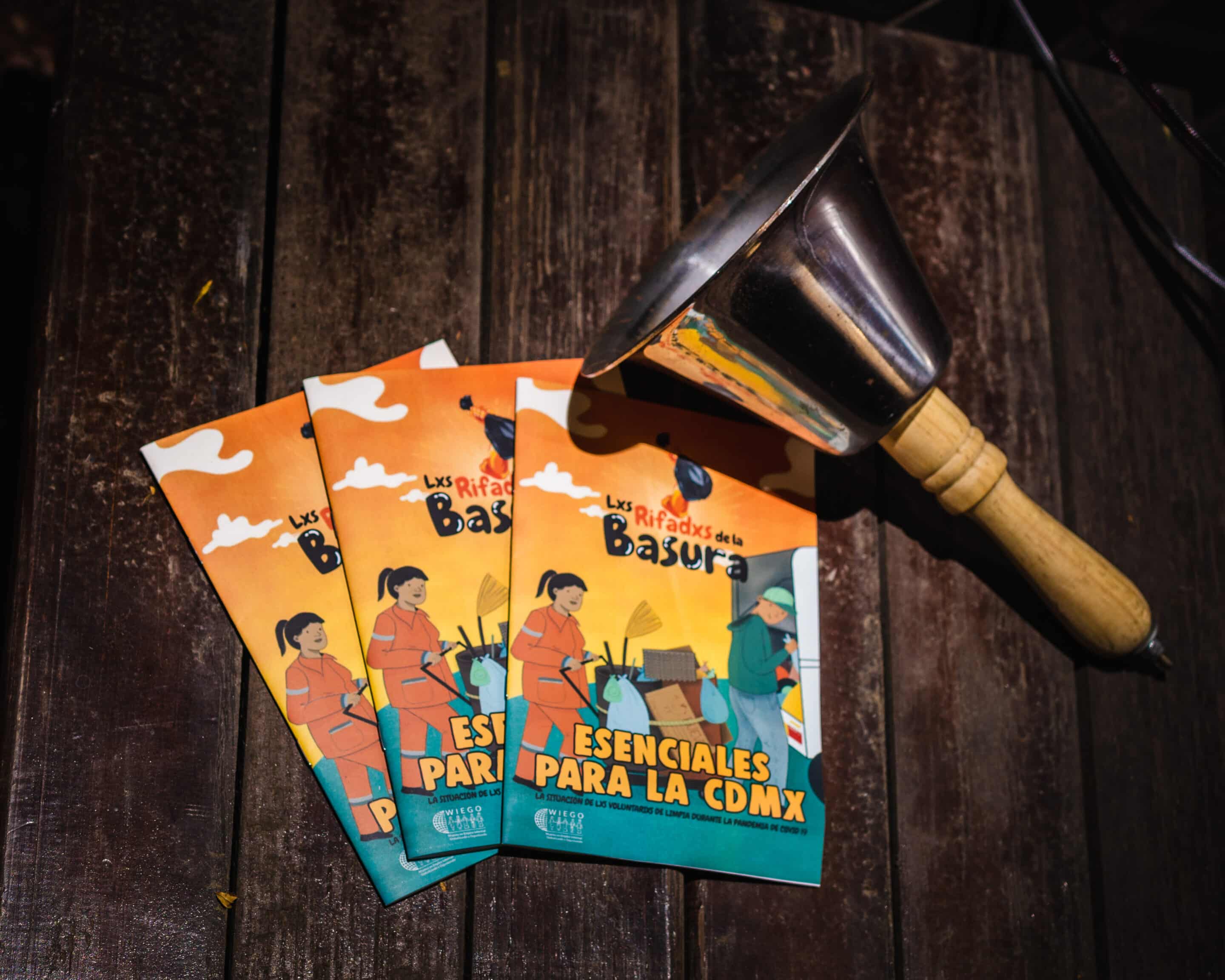
WIEGO and the Rifadxs created eight short videos featuring voluntarixs speaking about their daily routines, working conditions, and the challenges they faced due to their lack of official recognition as workers. 

These videos educated the wider population in Mexico City about the situation for unwaged waste workers, and created a new identity for those waste workers as “Rifadxs” as they began to tell their stories.
Positioning waste picker as superheroes builds a new narrative

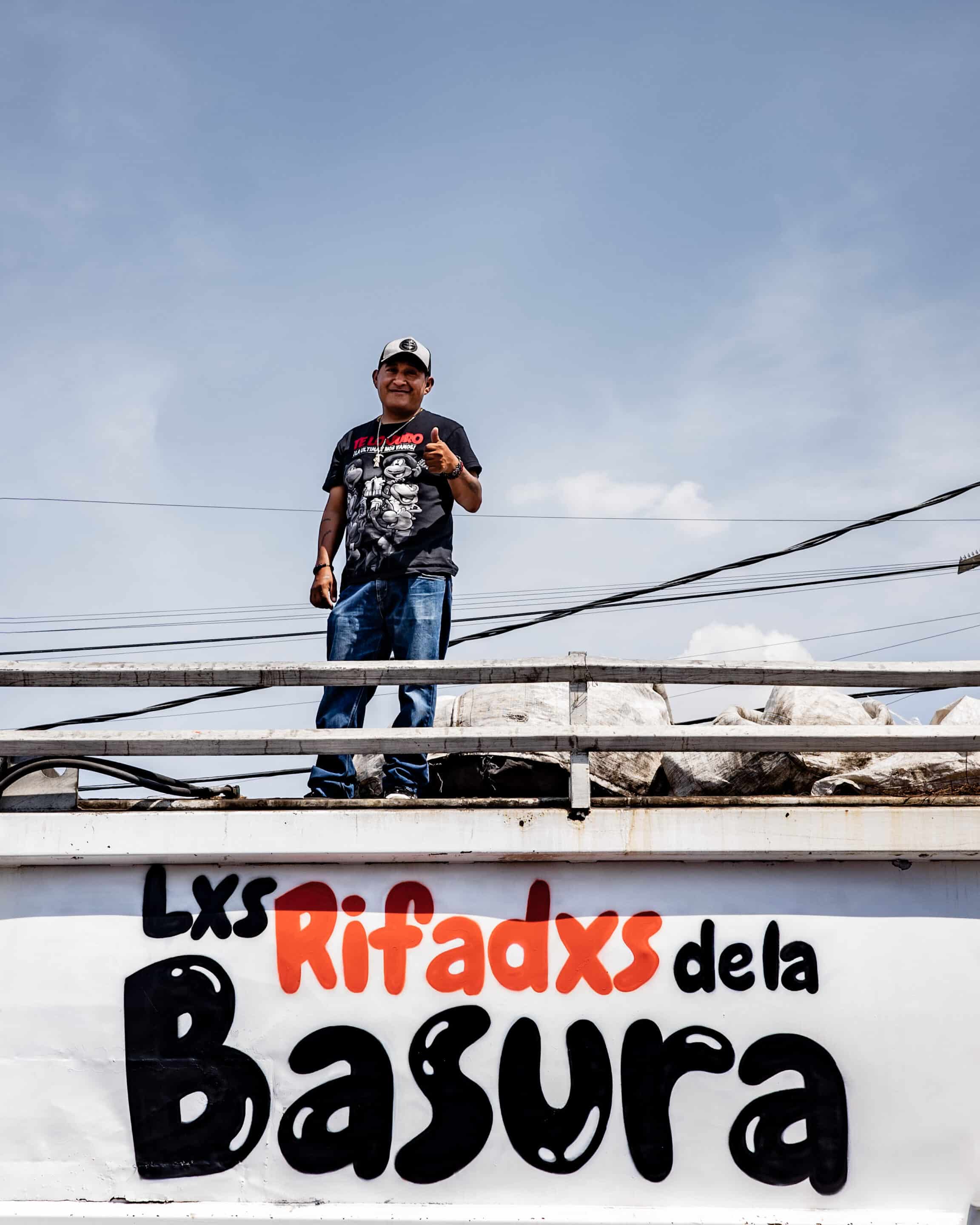
Espinosa said the campaign was successful because it caught the media’s attention and drew positive responses from the public, with its name describing the waste pickers as “waste superheroes”.

“Immediately we started hearing from people that they had no idea about the struggles faced by waste pickers. The videos made their situation clear in a very accessible way and to a wider audience.”

WIEGO and Rifadxs’ collaboration increased awareness, built support for volantarixs, and created a momentum that would enable the campaign to grow.

Waste picker, voluntario and mother-of-three Enriqueta Loreto said the group was determined to achieve their goals.  

“We have already planted a seed in people’s minds and we are not going to stop until we see a result”, she said.

Harnessing mutual support to confront harassment and intimidation

As the campaign rolled out and The Rifadxs gained visibility, they faced real risks, including intimidation and harassment, and loss of access to collection routes, which can mean a total loss of income.

Enriqueta Loreto said fear was a big challenge for her in the campaign, but felt she had to take the chance.

“But one says, because there are many colleagues, probably, because of punishment or because their sector heads or superintendents are going to tell them no… so you say, ‘well, I’ll take it’, right? What do I have to lose? If I have nothing, I lose nothing. For me, it’s a challenge to be able to support all my colleagues.”

Julio Miranda, a longtime waste picker leader who has run for union leadership, was involved in the campaign from the outset, and committed to supporting voluntarixs who were harassed or fired.

Documentary provides a holistic view of workers’ lives

By following workers along their daily routes, it highlighted their precarious working conditions, but also provided a more holistic view of their lives, for example, as single parents juggling work and child care.

The documentary was screened widely – by the Human Rights Commission of Mexico City, UCLA in Los Angeles, California, the Mexican film festival Ambulante, and Universidad Iberoamericana.

Soledad García Muñoz, who was the Rapporteur on Economic, Social, Cultural and Environmental Rights of the Inter-American Commission on Human Rights at the time, supported its screening at UCLA.

The documentary helped convince the Rapporteur that waste pickers’ rights were being violated and paved the way for a visit to Mexico City to observe their working conditions first-hand later that year.

National and regional alliances highlight human rights violations

WIEGO leveraged the Rapporteur’s visit as an opportunity to reinforce local alliances, including with the Human Rights Commission in Mexico City (CDHCM by its Spanish acronym) – which had already published Recommendation 07/2016, recognizing waste pickers as workers in the city – and the United Nations Independent Expert on Harmony with Nature.

WIEGO co-hosted a round table with the Rapporteur and the CDHCM President which shared a clear public message that waste pickers’ working conditions were human rights violations, that they are subjects of the law like any other workers in Mexico, and that their situation must change.

The Mexico Focal Cities team continued regional engagements with the Rapporteur, facilitating visits to Costa Rica, Peru and Panama alongside partners from the Latin American Waste Pickers Network (REDLACRE). With the Rapporteur increasingly exposed to the concerns of waste pickers, WIEGO submitted a joint application with the Solidarity Center/ILAW, and was granted a hearing to discuss the labour rights of workers in informal employment in the region at the commission’s July 2023 session.

It was the first time the issue of Mexico City waste pickers’ rights was brought before this regional human rights body.

Transparency, public awareness and protest

A strategic advocacy campaign ran alongside its creative outputs, with WIEGO supporting the Rifadxs to push for government transparency and accountability.

The team sent out hundreds of public information requests revealing the government’s failure to meet their promises to the city’s waste pickers.

In 2017, it promised to provide 10,000 contracts to the voluntarixs. They had only provided 5,000. The information requests also revealed that “Nomina 8” waste workers – a group of government-contracted waste workers – were being paid under the minimum wage.

Workers adapted the findings into a shareable infographic, and used it to build public awareness that both voluntarixs and other waste workers’ rights were being violated.

NOUS RECRUTONS

Taking demands to the top – and winning

In April 2023, WIEGO and the Rifadxs held a press conference outside the government offices in Mexico City, in collaboration with the Nomina 8 and other waste workers.

The campaign presented the mayor with a document that highlighted the voluntarixs did not have a salary, access to tools or any kind of support. It also pointed out the government-contracted waste workers were earning well under the minimum wage.

A week after the demonstration, the mayor announced a salary increase for various workers, including an increase for Nomina 8 workers that would bring their earnings up to $6,311 pesos per month.

Mexico City’s waste superheroes can see their vast impact: recognition that the voluntarix waste pickers are workers, greater public awareness, press attention, recognition in national and regional human rights bodies, and an essential wage rise for their colleagues.

By working alongside Rifadxs, WIEGO learned the importance of getting the right collaborators on the campaign – from creative agencies to political allies – to mitigate risk to workers and to ensure co-creation for authentic, powerful stories. It reinforces the need to combine and test multiple tactics to achieve practical change including visual storytelling, direct action, and alliance building with creative and human rights communities.

Read more stories like this

Waste pickers in Mexico City are one of many groups organizing for recognition. Explore how workers in informal employment are winning rights and reshaping the rules of their work.

Impact Stories

Learn more about our impact

WIEGO works alongside worker organizations to build their power, shape policy and improve livelihoods. See where that work is making a difference.

Our Impact