WIEGO
is a global network that supports the movement of workers in informal employment
is a global network that supports the movement of workers in informal employment
Membership-based worker organizations and individuals are part of the WIEGO Network. Our five core programmes work across several themes at the local, national, regional and global level.
Our Structure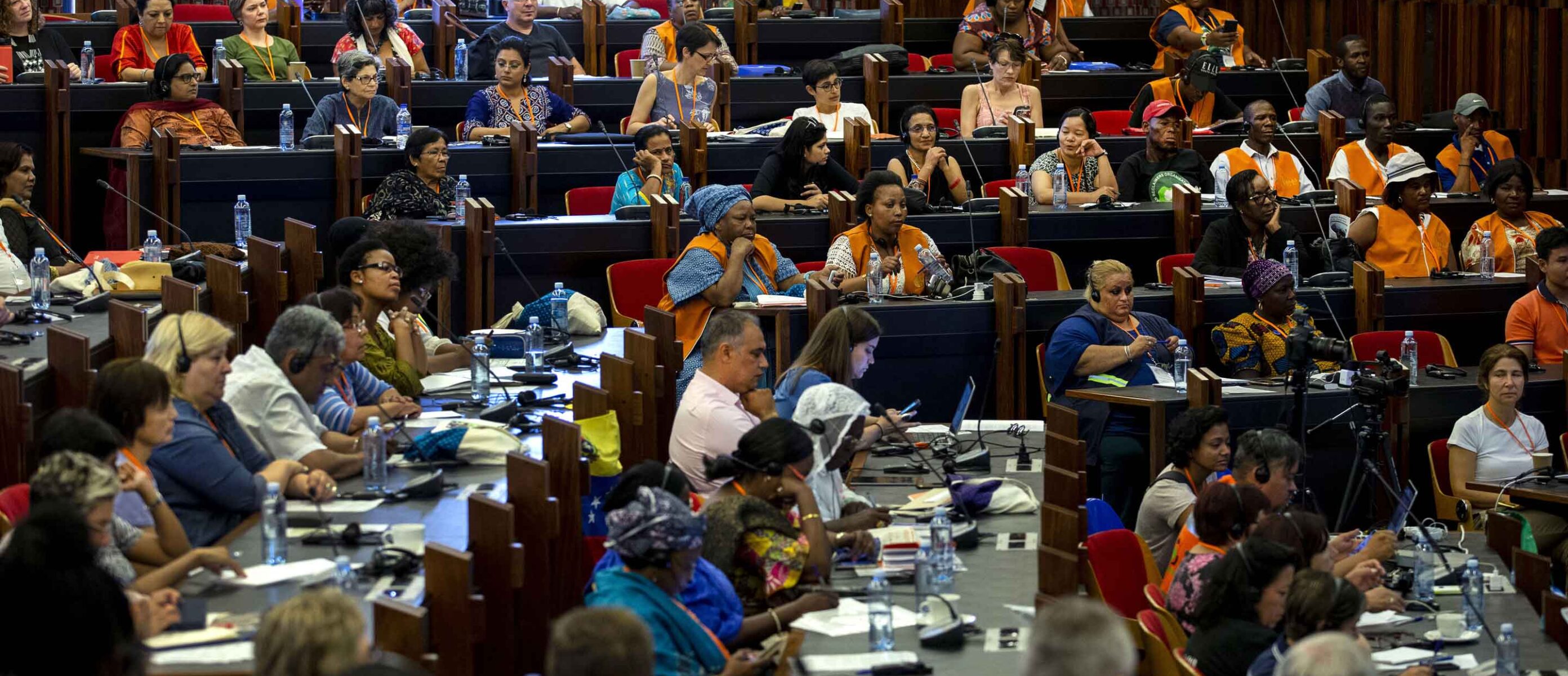
General Assembly held in South Africa
All workers should have equal economic opportunities, rights, and protections. WIEGO joins workers in informal employment to realize these rights by developing research, statistics and policy analysis to inform action led by women workers and their organizations.
Together, we build a fairer world of work, especially for women and those living in poverty.
What We DoThe informal economy is made up of all the economic activities, enterprises, jobs and workers that do not benefit from state protections. It includes a wide range of workers in different forms of employment – from vegetable vendors to smallholder farmers, domestic workers, home-based workers, waste pickers, gig workers and others.
Learn MoreBrowse a list of frequently asked questions about informal economy theory, concepts, statistics and other related themes. Answers are grounded in the latest research.
Learn MoreClose to 2 billion of the world’s workers are in informal employment. Unlock the latest statistics on informal employment, including global, regional and country data as well as by sector and sex.
Learn MoreWIEGO documents policies and practices which aim to bring about decent work in the informal economy. Examples range from the national, such as India’s National Street Vendors Act, to hyper-local child care centres run by waste pickers in Argentina.
Learn MoreWIEGO is at the forefront of developing statistics and research to help audiences understand the informal economy. Our research approach is collaborative and action-oriented – conducted with and for workers and their organizations.
Our library includes over two decades-worth of informal economy research, policy analysis, statistics and documentation of organizing efforts.
Browse the LibraryOur work is done with and for organizations of workers in informal employment, to inform their struggle for the right to work in safe, decent and healthy working conditions.
We develop research and statistics that increase the visibility of workers, and support them to organize, amplify their collective voice and influence policy.
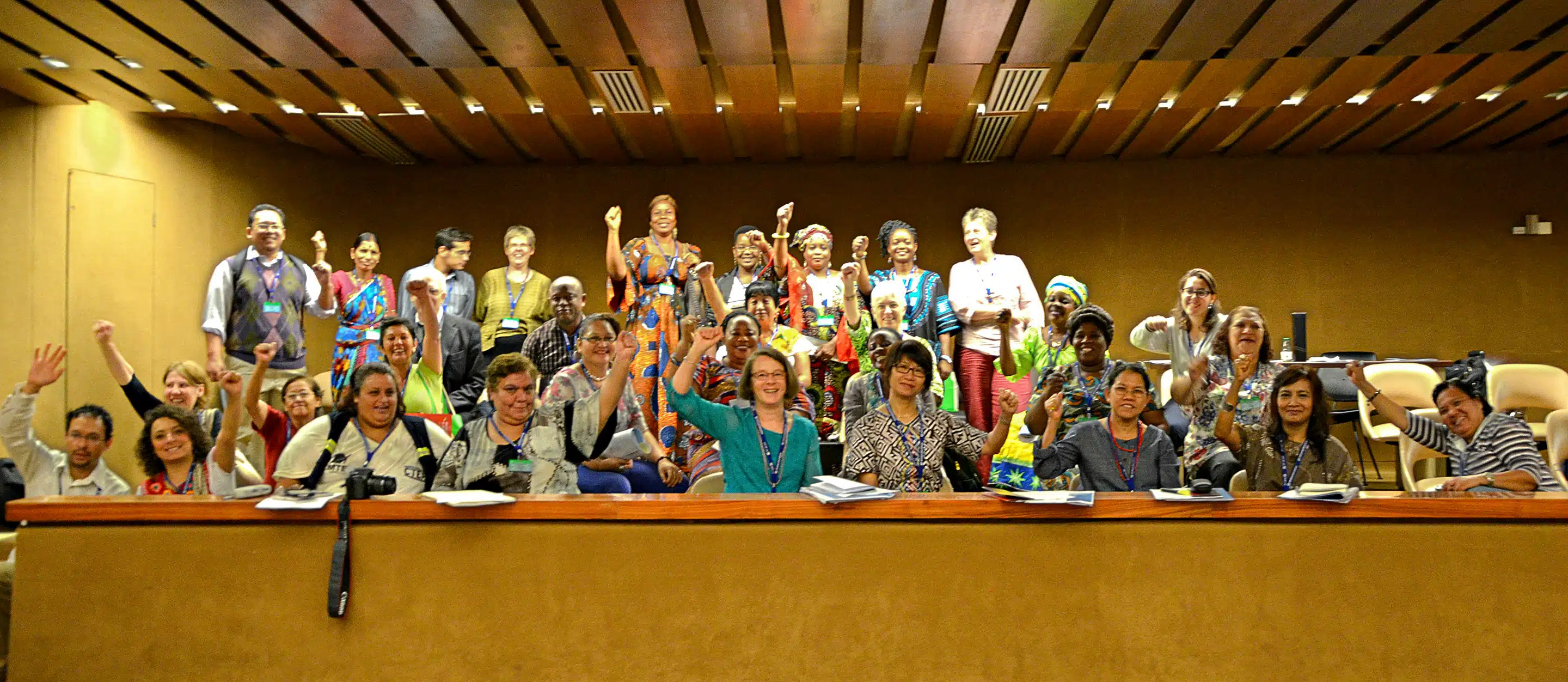
For 25 years, WIEGO and its allies have helped informal workers voice their issues at the International Labour Conference (ILC)—which influenced the creation of international instruments that can improve...
Read MoreFrom worker education to toolkits and position papers, workers need tools and resources to support them in negotiations, advocacy and more. WIEGO designs content to help workers in informal employment strengthen their organizations and secure their rights.
Browse our Advocacy and Worker Education Hub